
Whale Watching in Florida
By Visit Florida Staff
Manatees may be the most lovable and panthers the rarest, but Florida’s biggest endangered mammal may be one you don’t know about—the northern right whale.
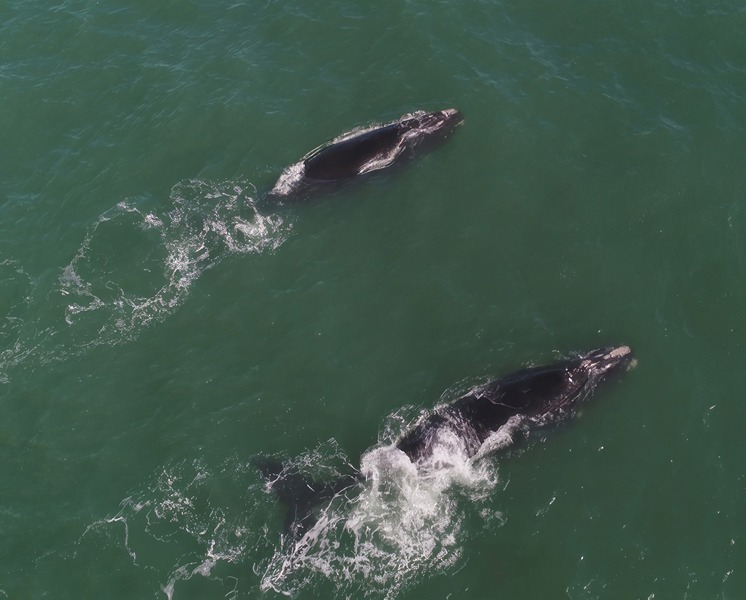
Right whales, which can grow to 70 tons and 55 feet long, are sighted every winter off the Atlantic coast between Jacksonville and Cape Canaveral. Hundreds of volunteers, plus visitors and residents of the northeastern coast, get the thrill of about 75 whale sightings between December and March each year.
Right whales spend the summer off New England and Nova Scotia. In November, some females, a few adult males, and assorted juveniles migrate south for the winter. By December, they’re acting like tourists, lolling around the beaches of Florida’s northern coast. The whales, however, are here on serious business—some of the females are pregnant, and it is in these waters that northern right whales give birth to calves and nurse them. In March, it’s time to head north again.
How To Go Whale Watching in Florida
There are no Florida whale-watching excursions. The whales are too hard to predict and spot, plus scientists are concerned that boats getting close could cause stress to the mothers and calves.
If you decide to go whale watching along Florida’s coast between Cape Canaveral and Jacksonville in the winter, you can improve your chances of spotting whales with this advice:
- Keep binoculars handy, but you can scan the ocean without them from any high vantage point.
- Whales are often in the company of dolphins, with seabirds overhead, so if you see either of those, take a closer look for whales.
- The most likely way you’ll spot a whale? First, you might see a lot of cars and a clump of people on the shoreline pointing and looking at the sea with binoculars. Since Flagler Beach has 6 miles of beachfront visible along A1A, it’s a likely place to come upon a whale sighting in progress.
- You can identify right whales by these characteristics: They spout a V-shaped spray of water, they have no dorsal fin, they have whitish patches of raised and roughened skin, called callosities, on top of their heads, and their tails are black on both sides.
- Humpback whales migrate through the same area on their way to their Dominican Republic winter waters, but they move through earlier and later than right whales.
There are four fishing piers that make good whale-watching spots: the St. Augustine pier, the 800-foot-long pier in Flagler Beach, the Sunglow pier in Daytona Beach Shores, and the Main Street pier in Daytona Beach.
Even if you don’t get lucky and spot a right whale, the northeast coast of Florida offers excellent opportunities for observing wildlife.
Why Are They ‘Right’ Whales?
Right whales got their name because they were the right whales to hunt. Early whalers appreciated that their high blubber content made them float when dead. Whalers reduced the population to a few dozen by 1900.
Share this article