Workforce Ready
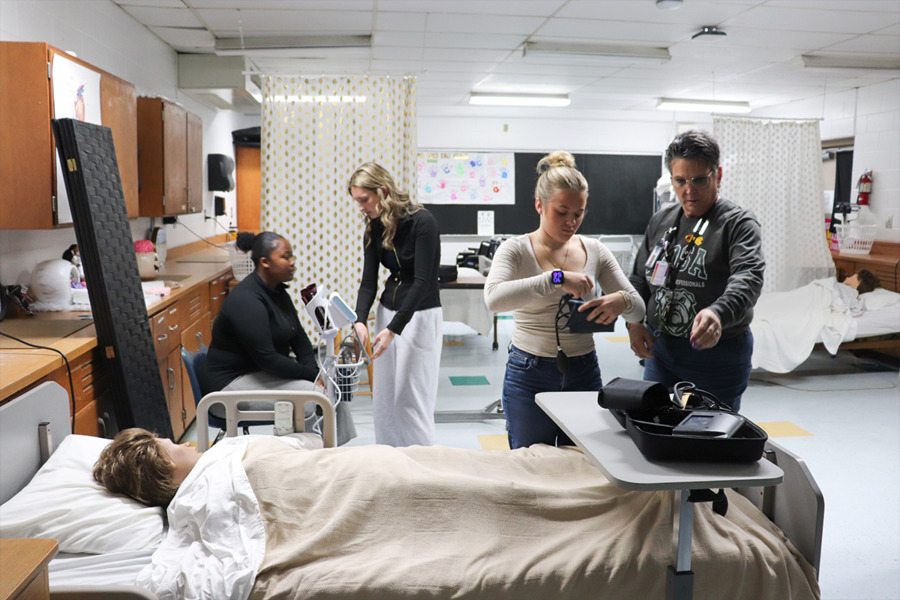
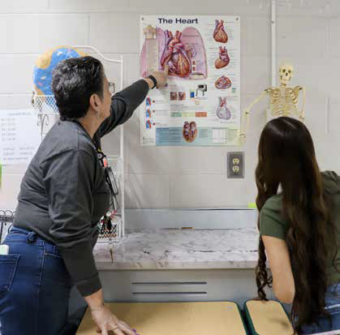
When students step into the allied health classroom at Suwannee High School, it’s immediately clear that this is not just a traditional class, but the first stop on a medical career path. Posters chart heart rhythms and pain scales. Medical terminology lines the walls.
Hospital beds sit ready for hands-on application. Students learn to use equipment more often found in clinics than in classrooms, learning skills many don’t touch upon until college or much later in life.
For second-year instructors Lori Abbott and Keri Koehn, that early exposure is exactly the point. “This is a golden opportunity,” Lori says. “These students are learning things now that most people don’t see until they’re adults.”
The allied health program at Suwannee High is a four-year pathway that introduces students to the breadth of health care while building real-world skills along the way.
Beginning in ninth grade with basic medical skills, students progress through anatomy and physiology, health foundations, and ultimately certification-focused coursework as seniors, including certified nursing assistant, or CNA, and EKG training.
Starting in the next school year, the program will expand to include emergency medical responder coursework, opening the door to even more career options.
The program isn’t just about training future nurses, though many students do pursue that path. It’s designed to help students discover where they fit within the medical field, whether that’s direct patient care, emergency services, diagnostics, or beyond.
“They graduate high school with a board-certified credential,” Lori says. “Even if they never work as a CNA long term, they have an ace in their pocket.”
Learning by Doing
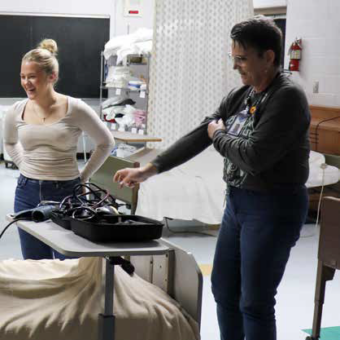
Hands-on learning is central to everything that happens in the allied health classroom.
Ongoing support from throughout the community helps fund new, critical equipment that allows students to practice skills instead of just hearing about them.
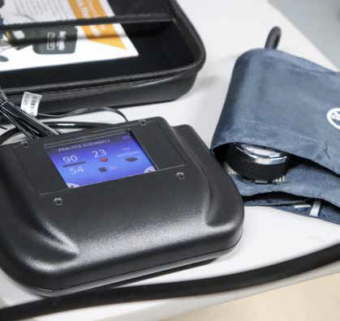
Recently, the program added new stethoscopes, including a dual-headed model that lets instructors hear exactly what students hear, blood pressure simulators, and a hand-hygiene visualization kit.
The equipment was purchased with funds from Operation Round Up®.
As a result, students learn how to operate real medical devices. Using the latest technology, they gain a deeper understanding of concepts like infection control through visual demonstrations that reveal how germs spread and how proper handwashing stops them.
“They don’t realize how many things they touch every day,” Lori says. “Seeing it makes it real.” The impact shows up quickly. Students become more confident, more careful, and more aware of their own health habits with knowledge that often spreads beyond the classroom to families and peers.
Beyond the Classroom
Allied health students are also encouraged to build leadership and service skills through the Health Occupations Students of America, a national organization that combines competition, community service, and professional development. More than 100 Suwannee students are members.
Through HOSA, students complete service hours, learn how to run meetings, practice public speaking, and compete in health care-related events. They’re learning professionalism, accountability, and teamwork — skills they can benefit from no matter where their careers lead.
“These kids are learning how to show up, how to follow through, how to work together,” Lori says. “Those are life skills.”
The program also works with River Oak Technical College across the street, allowing students to move seamlessly into additional training after graduation. Many leave high school already employed as CNAs, while others continue into nursing, emergency services, or related fields with a significant head start.
One former student recently returned to share her story, having worked as a CNA while pursuing nursing after discovering her passion through the program.
“That’s when you know it’s working,” Lori says. “They find their confidence.”
Community Support Is Essential
Keeping the program current requires creativity and community partnerships. Funding for certification testing comes from the school, but updated equipment and expanded learning tools often depend on local support and grants like those from Operation Round Up®. It’s necessary to fill critical gaps, ensuring students train with equipment that mirrors what they’ll encounter in real, modern-day health care settings.
“It’s about giving students access,” Lori says. “They deserve to learn with the same tools they’ll see on the job.”
Lori credits Suwannee High School Principal Laura Williams, the school’s administration, and district leadership for supporting the program’s growth, along with community partners like SVEC, who see the value in preparing the next generation of health care professionals.
For Lori, a nurse with more than 40 years of experience, teaching has become a way to give today’s students what she never had when she was attending Suwannee High — direction, confidence, and early exposure to meaningful career paths.
“When you see that moment where it clicks,” she says, “that’s everything.”
Inside this classroom-turned-clinic, students aren’t just learning about health care. They’re discovering who they can become and stepping into the future with skills, confidence, and opportunity already in hand.
Share this article