To the Rescue
What the 2025 FEMA Act Means for Emergency Response
 When Hurricane Idalia tore across North Florida in the summer of 2023, it delivered the most devastating blow SVEC has ever faced. The area’s electric system was crippled on a historic scale as the storm left behind snapped poles, miles of mangled line, and critical equipment that was heavily damaged or destroyed. Damage and recovery expenses totaled more than $70 million.
As a not-for-profit, member-owned cooperative, SVEC does not have shareholders to absorb losses from catastrophic events. Every dollar spent restoring the system ultimately affects our consumer-members, heightening the need for timely, predictable support from the Federal Emergency Management Agency (FEMA) to help fund recovery efforts after natural disasters.
SVEC’s recovery costs in Idalia’s wake are still working their way through the FEMA system today, as the agency’s processes have proven to be unpredictable and a challenge to navigate. That’s why SVEC has joined cooperatives nationwide in rallying behind a bipartisan bill in Congress called the Fixing Emergency Management for Americans Act of 2025, or H.R. 4669. If passed, it would modernize FEMA to fix long-standing inefficiencies and help ensure rural communities are not left financially vulnerable after major storms.
The Need for Reform
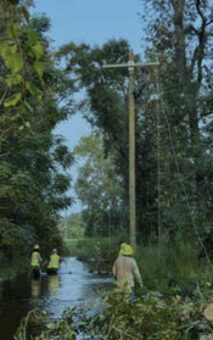
Photo by SVEC
In a recent interview, Jim Matheson, CEO of the National Rural Electric Cooperative Association, explained why H.R. 4669 is so important to the 900 electric cooperatives across the country.
“Electric cooperatives are owned by the consumers we serve,” Jim says, “so when a natural disaster strikes and there’s significant damage, every cost ultimately flows to the members unless FEMA helps cover restoration expenses.”
While co-ops and FEMA have worked together for decades, Jim notes the agency has become increasingly difficult to work with, causing long delays and unnecessary hurdles at a time when rural communities can least afford them.
“The good news is we have a chance to make it better,” he says.
President Donald Trump has expressed support for FEMA reform, and lawmakers on both sides of the aisle have signaled willingness to improve the system. H.R. 4669, introduced by Rep. Sam Graves of Missouri, passed the House Transportation and Infrastructure Committee in early September 2025 with strong bipartisan support.
Now, supporters aim to push it through Congress quickly.
Better, Stronger, Faster
The reforms in H.R. 4669 would provide real, measurable benefits for rural electric systems and the people they serve, including:
- A 120-day deadline for FEMA reimbursement decisions: Currently, this process can take months or years. “Predictability is essential,” Jim says. “We want FEMA to make quick decisions on when they can provide funding for disaster relief.”
- Streamlined approval for permanent repairs: Today’s rules often require co-ops to rebuild lines and poles exactly as they were, even if the old location or design contributed to repeated failures. The new legislation would allow smarter rebuilding. “If you’ve got a pole in a floodplain that goes down every couple of years, you should be able to move it,” Jim says. “This bill lets us build back better.”
- Improved access to resiliency funding: Co-ops could strengthen vulnerable infrastructure before storms hit, reducing outages and long-term costs.
- Reimbursement for interest on loans: When reimbursement is delayed, co-ops often need to borrow millions of dollars to complete repairs, accruing interest never meant for members to carry. Under the new bill, FEMA would cover those interest costs.
These changes would help ensure essential services are restored faster, reducing the financial impact on rural communities and protecting taxpayer dollars by eliminating waste and repeated repairs.
Putting You First
 SVEC serves a large, rural territory with fewer consumers per mile of line than urban utilities. That means the cost of storm restoration is shared among fewer people.
Similar co-ops also serve 92% of the country’s persistent poverty counties, making affordability a critical concern. Without improvements to how FEMA assistance is delivered, major disasters can force co-ops to raise rates simply to survive.
SVEC is committed to keeping power reliable and affordable. FEMA reform will help keep that promise when major storms strike.
Share this article